





 Client Portal








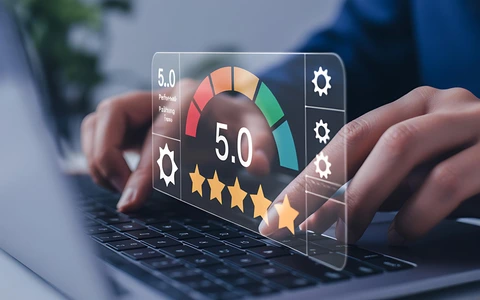
Walking down Orange Avenue or through the busy corridors of the Florida Mall, you see people glued to their phones. For years, the goal of every business in Orlando has been to catch those human eyes. We optimized websites for thumbs, made buttons bigger for easy clicking, and wrote catchy headlines to stop the scroll. But the landscape of how people buy things is shifting underneath our feet. We are entering an era where the person clicking the buy button might not be a person at all. It might be a piece of software acting on their behalf.
This shift is being called agentic commerce. While the name sounds technical, the concept is something we are already starting to see in small doses. Think about the last time you asked a virtual assistant to find the best price on a specific pair of running shoes or to reorder paper towels when you ran out. Agentic commerce takes that a step further. Instead of just finding a link, these AI agents are becoming sophisticated enough to research, compare features, read through hundreds of customer reviews, and eventually execute the transaction without the user ever visiting a traditional storefront.
For a business owner in Orlando, whether you run a boutique in Winter Park or a service company near Lake Nona, this changes everything about your digital presence. If an AI agent is the one doing the shopping, your website doesn’t need to be pretty in the traditional sense. It needs to be readable for a machine. The flashy banners and emotional photography that sway a human mind don’t mean much to an algorithm looking for technical specifications and verified stock levels.
The pace of life in Central Florida is fast. Between the tourism peaks and the growing tech corridor, residents are looking for ways to reclaim their time. When they start using agents to handle their purchasing, they won’t be looking at your color palette or your clever wordplay. They will be relying on a system that values cold, hard data. If that data isn’t there, your business effectively disappears from the modern marketplace. This creates a new priority for any local entrepreneur: being as transparent to a machine as you are welcoming to a person.
The Disappearance of the Traditional Sales Funnel
We have spent decades obsessing over the sales funnel. We lure people in with awareness, move them to consideration, and finally push for the conversion. In the world of agentic commerce, that funnel is compressed into a split second of data processing. When a resident in Dr. Phillips tells their AI agent they need a hypoallergenic dog food delivered by tomorrow afternoon under a certain price point, the agent doesn’t consider brands based on their TV commercials. It scans available data sets to find the match that fits the criteria perfectly.
The decision-making process moves away from emotion and toward utility. This doesn’t mean branding is dead, but it does mean that the technical foundation of that brand has to be flawless. If your product information is trapped inside an image or a poorly coded menu, the AI agent simply won’t see it. In its eyes, your business doesn’t exist. This creates a high-stakes environment where the quality of your digital data is just as important as the quality of the physical product you sell on your Orlando storefront.
Imagine a tourist planning a trip to one of our local theme parks. Traditionally, they might spend hours browsing blogs, looking at ticket prices, and comparing hotel amenities. An AI agent can ingest all that information in seconds. It can weigh the pros and cons of staying at a resort versus a vacation rental based on real-time traffic data on I-4, recent guest complaints about elevator wait times, and current weather patterns. The agent provides a curated result, and the user just says go ahead. The brand that provided the most accessible, honest, and structured data to that agent is the one that gets the booking.
The local business owner has to realize that the gatekeeper has changed. It used to be a Google search results page where you could fight for the top spot with enough backlinks. Now, the gatekeeper is an intelligent filter that only presents the single best option to the user. There is no second page of results in agentic commerce. You are either the choice the agent makes, or you are out of the loop entirely. Efficiency is the new loyalty.
Building for the Silicon Shopper
Most local businesses in Central Florida are still focused on the human experience of their website. They want a design that reflects the vibe of their physical location. While that still matters for brand identity, there is a secondary layer of invisible design that is becoming the priority. This involves structured content. When we talk about structured content, we mean organizing information in a way that software can easily categorize. It is like the difference between a messy junk drawer and a labeled filing cabinet.
If you sell artisan coffee in Thornton Park, a human sees a photo of a latte and feels a craving. An AI agent sees the photo and sees nothing unless there is metadata attached to it. The agent needs to know the origin of the beans, the roast profile, the price per ounce, and whether it is currently in stock. If that data is buried in a PDF menu or an uncaptioned Instagram post, you are effectively invisible to the growing number of people using AI tools to manage their lives.
This transition requires a move away from clever marketing toward clear marketing. We often try to be poetic with our product descriptions to evoke a feeling. While that still has a place, the primary job of a product page now is to provide facts. The AI agent is looking for specific attributes. Does this fit a specific size? Is it compatible with other products? What is the verified return policy? Providing this information in a clean, machine-readable format is the new SEO.
Think about the way Amazon organizes data. You can filter by almost anything. That is what an AI agent does on a massive, web-wide scale. If your independent Orlando shop doesn’t offer that same level of data granularity, the agent will naturally gravitate toward the platforms that do. To compete, you have to stop thinking like a storyteller and start thinking like a database manager. Machines do not care about your adjectives; they care about your attributes.
The Role of Large Brands and Local Impact
Companies like Samsung and Coca-Cola are already pivoting toward this reality. They aren’t just making ads for humans; they are ensuring their product data is integrated into the ecosystems where these AI agents live. In Orlando, we often see large-scale corporate shifts hit our hospitality and retail sectors first. The local hotels and restaurants that thrive will be the ones that ensure their menus, room availability, and service lists are easily parsed by Google’s AI or Apple’s ecosystem.
Google is already starting to place suggestions directly within AI-driven conversations. If someone is discussing a weekend outing with their AI, the system might suggest a specific restaurant in the Milk District. That suggestion isn’t random. It is based on which restaurant has the most reliable data that the AI can trust. If the AI isn’t sure about your hours of operation or your current pricing, it won’t risk making a bad recommendation to the user. Accuracy becomes the ultimate currency.
For a small business near the UCF area, this might feel overwhelming, but it actually levels the playing field. You don’t need a million-dollar advertising budget to have clean data. You just need to prioritize how your information is presented online. A small bike shop that meticulously lists every part and service in a structured format can easily outshine a larger competitor whose website is a confusing maze of Flash-style graphics and broken links.
The local economy thrives when information flows freely. When a convention comes to town at the Orange County Convention Center, thousands of visitors need services. If your business is the one that an AI agent can easily identify as the closest, most affordable, and most reliable, you win that business. This is the new way of building a local reputation—one that is verified by machines before it is ever experienced by humans.
Moving Beyond the Click
The metric of clicks has governed the internet for a long time. We want people to click our ads, click our links, and click our add to cart buttons. Agentic commerce threatens the very concept of the click. If the agent does the work, the user never sees your homepage. They never see your About Us section or the beautiful video you filmed of your team. They only see the result the agent presents.
This means your value proposition has to be baked into your data. You are no longer trying to convince a person; you are trying to satisfy the requirements of a program. This sounds cold, but it is actually a very efficient way to do business. It rewards businesses that are honest, consistent, and detailed. The fluff of traditional advertising starts to evaporate, leaving behind the actual substance of what you offer to the Orlando community.
Consider the local real estate market or property management in areas like Lake Mary or Celebration. A prospective renter might use an AI agent to find an apartment that allows large dogs, has a gym, is within a twenty-minute commute of their office, and has an average utility bill under a certain amount. The agent will scrape through listings, utility data, and maps to find the perfect spot. If a property manager hasn’t provided those specific details in a searchable format, they lose that lead before it even begins. The human renter never even knew that apartment existed because the agent filtered it out.
The disappearance of the click removes the friction of the digital journey, but it also removes the opportunity for spontaneous discovery. Unless your business is part of the data stream that the agent explores, you are essentially locked out of the consumer’s world. This requires a proactive approach to data distribution. You cannot wait for people to find your website; you have to push your data into the places where agents look.
Privacy and the Personal Assistant
One of the reasons this is taking off so quickly is because people are busy. In a fast-growing city like Orlando, time is a luxury. Between commuting on the 408 and balancing work and family, people want to offload the mental labor of shopping. Using an AI to handle the mundane tasks of finding a plumber or ordering groceries is an easy win for the consumer. As these systems get better at understanding a user’s personal preferences—like knowing they prefer organic produce or specific brands of clothing—the bond between the user and their agent grows stronger.
This creates a layer of gatekeeping. The AI agent acts as a protective shell around the consumer. It filters out the noise and the intrusive ads. To get through that shell, a business has to be invited in by the agent. That invitation is based on trust and data. The agent trusts your business because your data is consistent across the web. Your Google listing matches your website, which matches your social media profiles, which matches the third-party review sites. Inconsistency is a red flag for an AI agent.
Local service providers, such as AC repair companies or landscapers in the Orlando area, need to be particularly aware of this. When a homeowner has an emergency, they will likely ask their device to find someone to fix my AC. The device will look for the highest-rated, closest, and most reliably documented professional. If your business has conflicting phone numbers or unverified addresses across different platforms, the agent will skip you for a competitor who looks more reliable to the computer’s logic.
The agent is essentially a digital bodyguard for the consumer’s wallet and time. It doesn’t want to be blamed for a bad recommendation. If your business information is vague or outdated, the agent treats you as a risk. In the competitive landscape of Central Florida, reducing that perceived risk is the most effective way to gain new customers through agentic commerce.
Redefining the Digital Storefront
We are used to thinking of a storefront as a physical place or a visual website. In this new world, the storefront is an API. It is a stream of data that tells the world what you have, how much it costs, and why it is better than the alternative. This doesn’t mean you should delete your beautiful website, but you should treat it as just one version of your store. The other version is the one the machines see.
In Orlando, where tourism and local commerce blend together, this dual approach is vital. A family visiting from Europe might use an AI agent to find a hidden gem restaurant in College Park. They aren’t going to spend hours on local forums; they are going to trust the AI’s synthesis of those forums. Your job is to make sure your restaurant’s details—your current menu, your dietary accommodations, your parking situation—are all part of that synthesis.
This requires a shift in how we think about content. Content is no longer just blog posts or photos. Content is every piece of information about your business. It is your price list, your hours, your inventory, and your customer feedback. Managing this content effectively means using tools that help structure it for the web. Many modern website builders are already incorporating these features, but it takes a conscious effort from the business owner to fill in those details accurately.
For an art gallery in Ivanhoe Village, this means digitizing every aspect of the collection. For a boutique gym in SoDo, it means having a real-time feed of class availability and instructor certifications. This level of granular detail allows an AI agent to match your specific offerings with the specific needs of a user. The more detail you provide, the better the match becomes.
The Evolution of Search in Central Florida
Search engines are evolving into answer engines. When you search for something today, you often get a direct answer at the top of the page rather than a list of links. Agentic commerce is the logical conclusion of that trend. Why give the user an answer when you can give them the finished task? Instead of telling them where the best deals on patio furniture are in Sodo, the agent just says, I found the best patio set for you at a local shop, and it can be delivered Tuesday. Should I buy it?
This removes the browsing phase of the customer journey. Browsing is where a lot of impulse buys and brand discoveries happen. Without it, businesses have to find new ways to stay relevant. One way is to ensure that your products are categorized in a way that suggests them as add-ons or related items to an AI. If an agent is buying a grill for a customer, you want your local charcoal or seasoning company to be the first recommendation the agent makes to complete the kit.
Being part of that ecosystem of recommendations requires deep integration into local networks. It means your data shouldn’t exist in a vacuum. It should be linked to other relevant businesses and services in the Orlando area. This digital interconnectedness mimics the way local business communities have always worked, but at a much faster and more technical scale. Cooperation between local businesses can lead to better visibility for everyone in the agentic economy.
We are seeing the end of the keyword era. Agents don’t just look for words; they look for context and intent. If you are a lawyer in Downtown Orlando, you don’t just want to rank for personal injury lawyer. You want to be the firm that an agent recommends when a user asks for someone who has experience with specific local regulations or a high success rate in certain types of cases. Data regarding your results and specific expertise becomes much more valuable than a high-ranking keyword.
Adapting Your Marketing Strategy
If you are marketing to systems, your language changes. You focus less on adjectives and more on nouns and values. Instead of saying you have the most amazing and incredible pizza in Orlando, you state that you have wood-fired sourdough pizza with vegan-friendly options and 15-minute pickup times. The second sentence is much more useful to an AI agent trying to fulfill a specific request.
This transparency also builds a different kind of relationship with the human customer. When they eventually interact with your business, their expectations are perfectly aligned with what you offer because the AI agent did the vetting for them. This can lead to higher customer satisfaction and fewer returns or complaints. The agent acts as a filter, ensuring that the customers who find you are the ones who actually want what you have. This saves you the time and energy often wasted on mismatched leads.
In a city as diverse as Orlando, where we have a wide range of industries from aerospace to hospitality, this clarity is a competitive advantage. Whether you are selling professional services to companies in the Research Park or selling handmade goods at a local market, being the most discoverable business for an AI agent will determine your growth in the coming years. You are essentially building a digital twin of your business that works 24/7 to find the right customers.
Timing also plays a role. If your business has seasonal hours or special events at the Citrus Bowl, that information needs to be reflected in your data feeds instantly. An AI agent making a plan for a user this Saturday will ignore any business that hasn’t confirmed its weekend availability. Stale data is the quickest way to be ignored by an autonomous shopping system.
The Human Element in a Machine-Driven World
It is easy to feel like the human touch is being lost in this conversation. However, the opposite is often true. By offloading the logistical nightmare of searching and comparing to an AI, the interaction between the business and the customer can become more meaningful. When the customer finally walks into your Orlando shop or receives your service, the transactional part of the relationship is already handled. You can focus on the experience, the conversation, and the quality of your work.
The AI agent handles the what and the how much, but the human business owner still handles the who and the why. Your brand story still matters because it influences the reviews and the feedback that the AI agent uses to make its decisions. People will still talk about your great service or your unique atmosphere. Those human sentiments are processed by the AI as data points. The warmer the human feedback, the higher you rank in the agent’s logic. Passion translates into positive data.
This creates a feedback loop where doing good business in the real world is the best way to win in the digital world. You cannot game an AI agent with cheap tricks or keyword stuffing. It looks at the totality of your online presence. It sees what people are saying on social media, what they are writing in reviews, and how you respond to problems. In a way, agentic commerce forces businesses to be better versions of themselves because they are being held to a higher standard of accuracy and accountability.
Think about the coffee shops in Mills 50. Their success isn’t just about the beans; it’s about the community. An AI agent will find those shops for a user who values local culture and craft because that community sentiment is reflected in the reviews and social mentions. The machine does the work of the introduction, but the human owner still has to deliver the magic that keeps the customer coming back.
Technical Readiness for Orlando Businesses
So, what does this look like in practice for a business owner in Orlando? It starts with a digital audit. Look at your website not through your own eyes, but through the eyes of a data crawler. Are your prices clearly listed in a way that can be scraped? Is your address consistent across every map application? Are your product descriptions full of actual specs and details, or just marketing fluff? Every detail matters.
The next step is looking at where your data lives. Are you using local business directories effectively? Are your social media profiles updated with your latest offerings? In the world of agentic commerce, your data needs to be everywhere. The more places an AI agent can find and verify your information, the more confident it will be in recommending you. This is especially true for businesses in the Orlando tourism sector, where customers are often searching from different time zones and locations.
You also need to think about your programmable offers. Can a machine understand your discounts or loyalty programs? If you have a buy one, get one deal that is only written on a chalkboard in your shop, an AI agent will never know about it. If it’s coded into your online ordering system, the agent can factor that into the price comparison, making your business more attractive to the budget-conscious shopper.
- Audit your Google Business Profile for total accuracy in hours and contact info.
- Add schema markup to your product pages so agents can identify prices and stock levels.
- Use specific, non-marketing language in your technical descriptions.
- Ensure your inventory management system reflects real-time changes.
- Consolidate your reviews on platforms that are easily accessible to web crawlers.
- Integrate with local delivery or reservation APIs whenever possible.
This technical foundation is not a one-time project; it is a continuous process of maintenance. Just as you would maintain the storefront on East Colonial, you must maintain your digital storefront. The reward is a constant stream of highly qualified customers who have been pre-screened by their own AI assistants. It is the ultimate form of targeted marketing without the invasive tracking of the past.
The Future of Discovery
We are moving away from a world of searching and toward a world of finding. The difference is subtle but profound. Searching is an active, often tedious process for the human. Finding is the result of an AI agent doing that work for you. For businesses in Orlando, the goal is to be found. This doesn’t happen by accident. It happens by being intentional about your digital footprint and ensuring that you are providing the best possible information to the world.
The rise of agentic commerce is an invitation to clean up the digital clutter. It is a chance to focus on the core values of your business and present them in a way that the modern world can understand. Whether it is a person looking for a quick lunch in Downtown Orlando or an AI agent looking for a long-term service contract for a corporate office, the requirements are the same: accuracy, reliability, and ease of access. If you master these, you will be well-positioned for whatever comes next.
As we see more of these AI systems being integrated into our cars, our phones, and our homes, the businesses that adapt first will have a significant head start. They will be the ones that the agents know and trust. In a city that is always moving forward, like Orlando, being at the forefront of this shift isn’t just a tech trend; it is a survival strategy for the new economy. The early adopters will be the ones who define the new standards of customer service and convenience.
The shift to agentic commerce isn’t something that will happen overnight. It is a gradual transition that is already underway. Every time someone asks a smart speaker to buy something or uses a chatbot to plan a trip, they are participating in this new system. For the local business owner, the mission is clear: make sure the machines can read your value as clearly as a human can feel your passion. When the AI agent goes shopping, you want your name to be the one it presents to the customer.
This doesn’t require a degree in computer science. It requires a commitment to being clear and consistent. It requires looking at your digital presence as a source of information rather than just a digital brochure. By focusing on structured data, honest information, and a strong local reputation, your Orlando business can thrive in an era where the shoppers aren’t always human, but the results are very real. The future belongs to those who make themselves easy to find.
The landscape of Central Florida commerce has always been about adapting to the next big thing, from the arrival of the railroad to the opening of the major parks. Agentic commerce is simply the next chapter in that story. It is a new way of connecting people with the things they need, and it offers a massive opportunity for those ready to speak the language of the future. Staying relevant means being where the customers are, and more and more, those customers are delegating their decisions to AI.
By ensuring your business is ready for that shift, you aren’t just preparing for a tech trend—you are ensuring that your business remains a vital part of the Orlando community for years to come. The goal is to be the obvious choice, whether that choice is being made by a human mind or a sophisticated algorithm. The businesses that provide the best service and the most reliable information will always win, and agentic commerce is just the newest tool to help them do exactly that. The way we shop is changing, but the desire for excellence remains the same.
